
Keeping an RV road trip smooth means thinking ahead about the gear you pack. Out of all the gadgets and tools I carry, a portable air compressor is easily one of the most useful. Whether you’re hanging out at a remote campground, hitting sand dunes, or just cruising across states, keeping your tires properly inflated can make a big difference for safety and comfort. If you’ve ever wondered if it’s worth carrying one in your RV, I’ve gathered everything you should know for road-ready confidence.
Why Tire Pressure Matters for RVs
Tires are a simple part of the RV setup, but they’re pretty important for safety, ride comfort, and even fuel use. Since RVs are much heavier than regular vehicles, they put more stress on tires. Driving with tires that are too low or overinflated can damage them and might even lead to blowouts or accidents down the road. Tire pressure often drops from temperature changes, slow leaks, or just sitting parked for a while and not being used.
If you don’t check the pressure before each trip or long drive, you could end up dealing with uneven tire wear, vibrations that make driving noisy, or bad gas mileage. For towable RVs, improper tire pressure can lead to sway or uneven towing. That’s why I always suggest a quick check before hitting the highway and after setting up at camp.
One important thing to know: weight distribution in your RV can change—water tanks, gear, and passengers leave their mark. Keeping tires at the right pressure helps spread that weight evenly on the road, reducing the chance of tire wear patches or wobbly steering. It’s simple, but this habit goes a long way for your peace of mind.
What is a Portable Air Compressor?
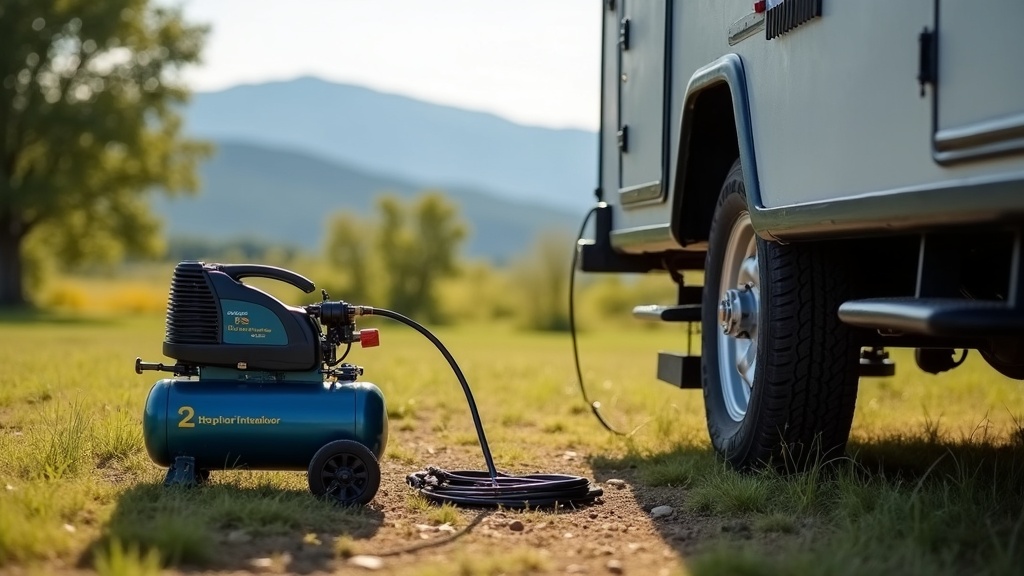
If you haven’t used one before, a portable air compressor is a compact, motor-driven device that pumps air into tires, inflatables, and sometimes even tools or sports gear. These units are designed to be easy to carry and usually run off your RV’s 12V outlet, a dedicated battery, or standard plug-in power. Some even include built-in pressure gauges and automatic shut-off features so you don’t have to guess when you’ve reached the right PSI.
There’s a wide variety available—from super compact glovebox compressors to larger, faster models that can handle the tough tires found on motorhomes and big fifth wheels. Having one on hand means you’re not relying on truck stops or gas stations to fix a low-pressure problem. That’s especially handy if you love camping off-grid or exploring less-developed areas where service stations are miles away.
Types of Air Compressors You’ll Find in RVs
I’ve seen everything from budgetfriendly to professional grade air compressors stowed in RVs. Here’s a rundown of what’s out there:
- 12V Compact Compressors: These are lightweight and run off your vehicle’s accessory outlet. They’re best for topping up smaller RV tires or trailer tires. Don’t expect them to fill a fully flat, heavyduty tire very quickly, though.
- Heavyduty Portable Compressors: These usually come with longer hoses, stronger motors, and can handle big jobs. They work well for large Class A or C motorhomes, and many models have built-in pressure cut-offs so you won’t overinflate by accident.
- Multipurpose Air Systems: Some air compressors include accessories—adapters for sports equipment, air mattresses, or inflatable kayaks—making them super useful for more than just tire emergencies.
Choosing the right size is crucial. Smaller models are great for topping up, but big rigs need more power. It’s worth reading specs closely and making sure the unit matches your tire’s pressure requirements. For anyone who tackles both on-road and offroad adventures, a compressor that can handle all the jobs is a real asset.
How to Use a Portable Air Compressor Safely
Operating a portable air compressor is pretty straightforward, but a little attention keeps things safe and simple. First, always park on level ground and engage your parking brake. Check your owner’s manual to confirm the right PSI for your specific tires—you’ll usually find this on a sticker inside the RV or in the manual.
Here’s a quick checklist for safe use:
- Turn off your engine but keep ignition on if using a 12V compressor.
- Attach the air hose snugly to the tire valve. Make sure you don’t hear a hiss of air—if you do, try reconnecting until it’s airtight.
- Set the desired PSI on the compressor if it has digital controls, or keep an eye on the built-in gauge.
- Run the compressor and stay nearby in case something needs your attention, like a hose popping off or the unit overheating.
- Once done, disconnect and do a quick check with a tire pressure gauge to confirm even readings all around.
Most RV tires have high-pressure needs (sometimes 80 PSI or more on big rigs), so pick a compressor equipped to handle high loads without overheating. Stay aware and take breaks if your unit gets hot, especially with several tires to go. That extra care can add years to your compressor’s working life.
Common Scenarios Where a Portable Air Compressor is Handy
Carrying an air compressor isn’t just about fixing emergencies. It makes everyday RV life smoother. Here are some practical times when having one comes in clutch:
- Dealing with Temperature Swings: Cold snaps drop tire pressure fast. A compressor lets you bring it right back up before your next drive.
- OffRoad Driving: Letting some air out for sandy or gravel roads helps your tires grip better and cushion bumps, but you’ll want to pump them back up before returning to pavement so you don’t wear out the treads.
- Slow Leaks: Sometimes it’s days until you can get a flat checked or replaced. A compressor buys you the miles needed to reach the next safe stop.
- Topping Up Inflatables: Air mattresses, paddleboards, or beach toys are ready in minutes with a portable compressor—no more running out of breath or scrambling for a power source at a campsite.
- Staying SelfReliant: Boondockers and campers parked far from services aren’t left stranded thanks to portable compressors. Peace of mind out in the wild is priceless.
From routine upkeep to unexpected fixes, a portable compressor makes you a more capable traveler. It means fewer interruptions to your adventure and less worry about finding help if the nearest service station is hours away.
Choosing the Right Air Compressor for Your RV
The right compressor depends on your RV size, tire needs, and how often you plan to use it. Here’s what I pay attention to when making a purchase:
- Maximum PSI and Air Flow Rate: Bigger RVs need compressors with higher maximum pressure—sometimes up to 120 PSI. Check both air pressure capacity and flow rate (CFM, or cubic feet per minute). Higher CFM means faster inflation.
- Size and Portability: Heavyduty units usually weigh more and take up more storage. Compact ones are easier to stash but might be slower on large tires.
- Power Source: Some plug into a 12V outlet, others attach with alligator clips right to your battery, and a few can run off 120V AC. Make sure you pick the type that fits your setup and travel style.
- Automatic Shutoff: This feature prevents accidental overinflation and lets you multitask, provided you check back often.
- Hose Length and Accessories: Longer hoses and adapters make it easy to reach every tire, even on extended rigs.
I always suggest watching video reviews and reading realuser feedback to size up how these compressors work outside the showroom. The right one will make tire adjustments a quick part of your travel routine instead of a dreaded chore.
Are There Any Downsides to Carrying One?
The main downsides are the device’s size, weight, and cost—as well as remembering to maintain the compressor itself. Some compressors get bulky, taking up valuable storage. Cheaper or underpowered models may run slowly or even break after just a few times. Buying a quality one comes with an upfront cost; a solid unit suitable for large RVs might go above $200.
Despite these drawbacks, I find having one on board worth it every time. Even with meticulous tire care habits, there is nothing like solving pressure issues on your own, especially when an air pump at a gas station is awkward to reach or off the beaten path. Being prepared always outweighs the hassle of storage when it comes to safety and convenience on the road.
Extra Tips for Maximizing Your Compressor
- Practice at Home: Familiarize yourself with your compressor before ever needing it away from home. It’s better to work out the kinks in your driveway than in a campsite.
- Keep a Tire Gauge: It never hurts to double check readings after inflating. Sometimes built-in gauges are a little off—accuracy gives you peace of mind.
- Store It Safely: Keep your compressor protected from moisture to avoid rust or electrical issues. Using a padded case goes a long way in keeping it functional for the long haul.
- Check Adapter Compatibility: Make sure your compressor’s adapters work for your RV’s tires and any other gear you might want to inflate along the way.
- Spare Fuses: Many portable compressors use inline fuses, and having extras around means you’re not out of commission if one blows.
Adding a simple toolkit and tire repair kit to your compressor setup is smart too. Sometimes, topping up is only half the battle if there’s a slow leak or nail in your tire. With preparation, most tire issues become little more than a pit stop.
Other Ways to Manage Tire Pressure On the Road
While a portable air compressor is one of the most convenient ways to keep things running smoothly, there are a few alternative options for tracking and managing tire pressure as you travel:
- Tire Pressure Monitoring Systems (TPMS): These systems allow you to monitor your tire’s pressure in real time with dashboard readouts, offering instant alerts if anything is off.
- Manual Hand Pumps: Basic, compact, and lightweight, these can handle small tires or inflatables in a pinch but aren’t practical for larger RV or truck tires.
- Onboard Air Systems: Some large RVs and heavy-duty rigs install permanent air systems powered directly by the engine or through auxiliary sources. These offer topnotch convenience but come at a much steeper price—and for most travelers, a good portable compressor does just fine.
Regularly checking your tire pressure is a crucial step for both your ride’s performance and your wallet. Each approach to tire care carries benefits, but a portable compressor covers so many scenarios that I’d call it the single most useful upgrade.
Frequently Asked Questions
Here are a few things RVers often ask me about air compressors:
Question: Can a small 12V compressor handle my Class A diesel RV tires?
Answer: For most big rigs, you’ll need a heavyduty compressor that can reach 110 to 120 PSI at least. Smaller 12V models don’t always have the muscle for large tires, so check the specs carefully before buying.
Question: Is it okay to leave my compressor plugged into the RV’s 12V outlet?
Answer: It’s not a good idea to leave it plugged in when not in use. While many units include an on/off switch, leaving one connected may slowly drain your RV battery.
Question: How often should I check my RV tire pressure?
Answer: Always check before every trip, after a long drive, and each time you set up camp for more than a few days. Tire pressure fluctuates a lot with temperature and daily use.
Final Thoughts
For anyone who travels in an RV, a portable air compressor isn’t just for emergencies—it’s a straightforward, reliable way to keep your home on wheels both comfortable and safe. Whether you favor remote boondocking or busy highways, having your own tire inflation tool gives peace of mind and smooths out your entire ride. The cost is tiny compared to the hassle and risk of running on underinflated tires.
Getting comfortable with your compressor, picking a solid model, and keeping it handy will pay off mile after mile. For me, there’s no question anymore—if your storage allows, pack one. Your future self, stuck in a far-flung parking lot with a slow leak, will definitely be grateful. Safe travels and smooth adventures ahead!